Introduction
Electric vehicles (EVs) are rapidly accelerating the global transition toward sustainable transportation. But what happens when their high-voltage batteries retire from vehicle duty yet still retain significant storage capacity? Rather than letting them sit unused or go straight to recycling, EV batteries can begin a valuable Second Life. This blog explores how repurposing these batteries boosts sustainability, supports energy systems, and how IoT solutions like IoTNarad can unlock deeper operational intelligence across industries.
What Are Second-Life EV Batteries?
When an EV battery degrades to around 70–80% of its initial capacity — no longer ideal for powering vehicles — it can be repurposed for stationary energy applications without being “dead.”
- These batteries still hold valuable energy storage potential.
- Second-life use can support grid storage, renewable integration, microgrids, home energy systems, demand side management, and more.
- Repurposing reduces environmental impact by lowering landfill waste and diminishing the demand for new raw materials.
Benefits to Sustainability and Economics
Second-life EV batteries are more than a reuse story — they are central to circular economy strategies:
Environmental:
• Extending battery life delays recycling and reduces greenhouse emissions tied to material extraction.
Economic:
• Retrofitting old batteries for energy storage is often less expensive than manufacturing new stationary battery systems.
• Their deployment in residential or commercial systems can yield cost savings on energy bills.
IoT: The Missing Link to Operational Intelligence
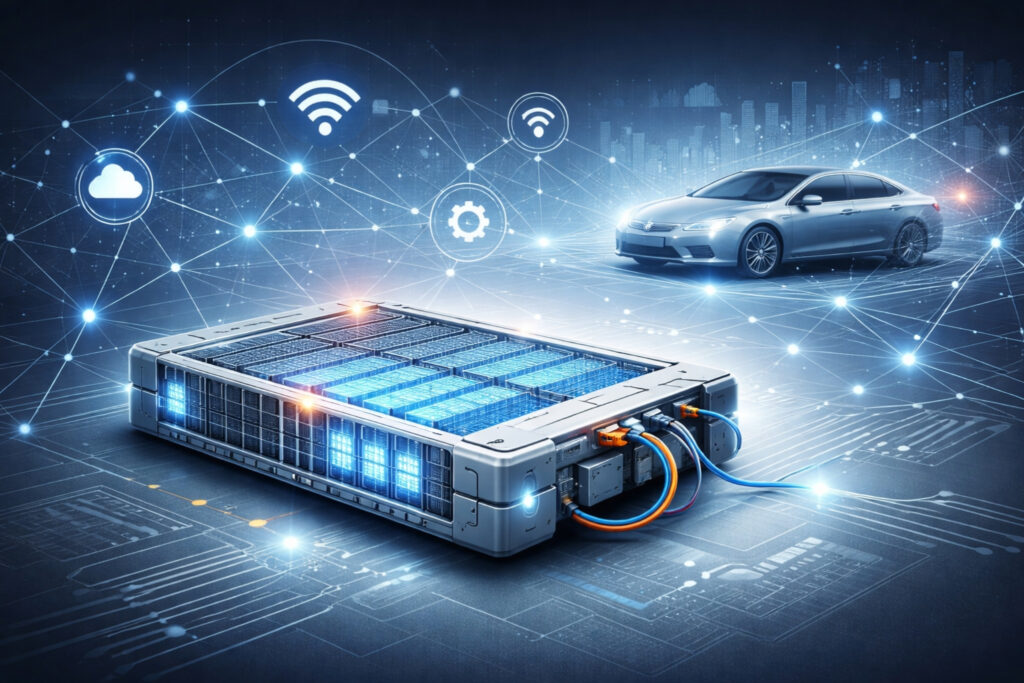
While second-life batteries add value, managing them effectively requires real-time data visibility and control. That’s where IoTNarad, a universal IoT gateway, becomes essential:
Plug-and-play IoT connectivity:
• IoTNarad bridges legacy energy equipment and smart systems, enabling real-time data collection from disparate sources.
Centralized control & analytics:
• With edge-to-cloud telemetry, stakeholders can monitor battery state, load patterns, performance degradation trends and system health.
Scalable deployments:
• From single residential setups to larger energy networks, IoTNarad provides secure, scalable, and flexible connectivity.
Use Cases Across Sectors
- Renewable Energy Storage
Repurposed EV batteries can store solar or wind power for later use. IoTNarad enables remote monitoring, alerts and predictive maintenance — critical for maximizing uptime and performance. - Smart Grid Management
Second-life batteries can participate in demand response and grid balancing; IoTNarad can feed real-time storage metrics into utility dashboards. - Commercial & Industrial Operations
In facilities aiming for energy resilience and cost reduction, IoT-enabled battery packs help optimize consumption and avoid peak charges.
Conclusion — Toward a Smarter, Greener Future
Second-life EV battery deployment represents a meaningful shift toward smarter energy reuse, circular economy principles, and reduced carbon impact. However, to truly unlock the value of these repurposed assets — especially at scale — stakeholders need robust IoT connectivity and intelligence.
IoTNarad fills this gap by linking batteries (and other systems) to intelligent analytics and centralized control, enabling optimized energy systems for smart cities, microgrids, industrial environments and more.
👉 Ready to harness second-life battery intelligence?
Learn how IoTNarad’s universal IoT platform can help your organization accelerate digital transformation and operational intelligence with real-time insights.