Why India’s EV Fleet Operators Are Losing ₹Crores to Battery Blindness
Picture this: an e-rickshaw operator in Hyderabad starts his morning shift, only to find his three-wheeler stranded on the roadside — battery dead, trip cancelled, income lost. For him, it is an isolated bad day. For fleet operators running 50, 100, or 500 such vehicles, it is a systemic crisis happening quietly, every single day.
India now has over 2 million electric vehicles on its roads, and the number is climbing fast. The country’s EV battery market, valued at USD 2.71 billion in 2025, is set to grow at a staggering 21.7% CAGR through 2034, reaching nearly USD 15.9 billion. Government programs like FAME and PM E-DRIVE are pushing electric mobility into every segment — from last-mile delivery to school buses.
India’s EV battery market is projected to reach USD 15,898 million by 2034, growing at 21.70% CAGR. |
But here is the silent crisis beneath the growth: most EVs in India still operate without meaningful battery telemetry. Fleet operators fly blind. They do not know a battery is degrading until a vehicle breaks down. They cannot predict maintenance windows. They have no visibility into driver charging behaviour that shortens battery life. And they certainly cannot remotely intervene when a vehicle is being misused.
The Five Failure Points of an Unmonitored Fleet
Operating a fleet without real-time battery data means accepting five chronic losses as a cost of business:
- Battery disbalance goes undetected. In lead-acid pack configurations — still the dominant chemistry for three-wheelers and commercial EVs — individual cells degrade at different rates. Without per-cell voltage monitoring, one weak cell pulls down the entire pack.
- Charging mishandling shortens battery life. Drivers regularly over-charge or deep-discharge batteries without realising it. Each abusive cycle permanently reduces capacity. Over a 500-vehicle fleet, this unchecked behaviour can wipe 30–40% off your battery asset value within 18 months.
- Overloading damages cells. A three-wheeler rated for 250 kg but routinely carrying 400 kg draws excessive current. Without load and current monitoring, you will never know — until the battery fails prematurely.
- No telematics means no accountability. Without GPS and speed data, you cannot prove where your vehicle was, how it was driven, or why it arrived late.
- Reactive maintenance is expensive. Replacing a battery because it failed costs 3–5× more than replacing it at the optimised end of its managed lifecycle.
XapSync 4.0: Visibility That Pays for Itself
Xaptronics built XapSync 4.0 specifically to close this intelligence gap. It is an AI-enabled Battery and Vehicle Data Management System designed to work with both lead-acid packs (monitoring up to 6 batteries in series) and lithium-ion vehicles via CAN Bus integration.
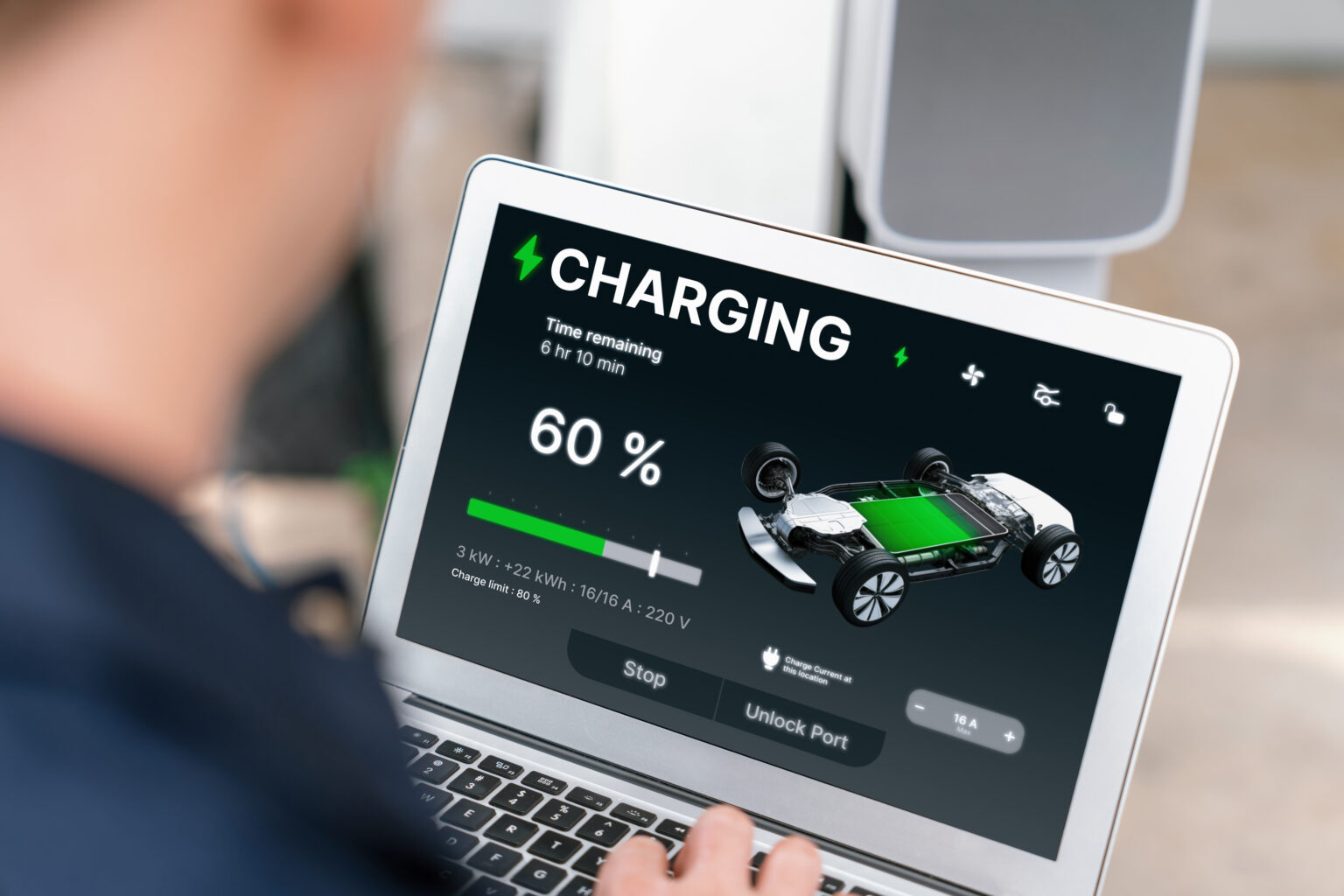
Every vehicle fitted with XapSync 4.0 streams real-time data to Xaptronics’ India-based cloud platform: voltage, current, temperature, State of Charge (SoC), State of Health (SoH), GPS coordinates, vehicle speed, trip counters, and fault codes. Fleet operators access this through an interactive dashboard — or receive automated alerts when any parameter crosses a threshold.
IoT-powered predictive maintenance reduces unplanned downtime by more than 30% compared to traditional reactive methods. |
The AI layer does not just monitor — it predicts. By analysing historical charge-discharge cycles, temperature patterns, and SoH trends, XapSync 4.0 forecasts when a battery pack will need servicing — weeks before failure. For a 100-vehicle fleet, that translates directly into fewer breakdowns, higher vehicle availability, and lower total cost of ownership.
Differentiators That Matter
XapSync 4.0 stands apart in three critical ways. First, it is the only platform with native lead-acid battery support, which still powers the majority of India’s commercial EV fleet. Second, it includes role-based cloud access — fleet managers, operations teams, and executives each see the data they need. Third, it supports geo-fencing and remote vehicle control, including the ability to remotely disable a vehicle — a feature absent from competing platforms and standard BMS solutions.
The ROI Conversation
For a fleet operator running 50 vehicles, a single prevented battery failure (₹15,000–₹40,000 per pack replacement) covers months of subscription cost. Add reduced driver misuse, better insurance negotiation, and optimised charging cycles, and XapSync 4.0 is not just a monitoring tool — it is a fleet profitability platform.
India’s mobility market is valued at USD 600 billion, with over 6 million passenger vehicles and growing EV penetration at approximately 8% overall. The question is not whether fleet intelligence will become standard — it is which operators will adopt it first and gain the competitive advantage while others react.
▶ CALL TO ACTION |