
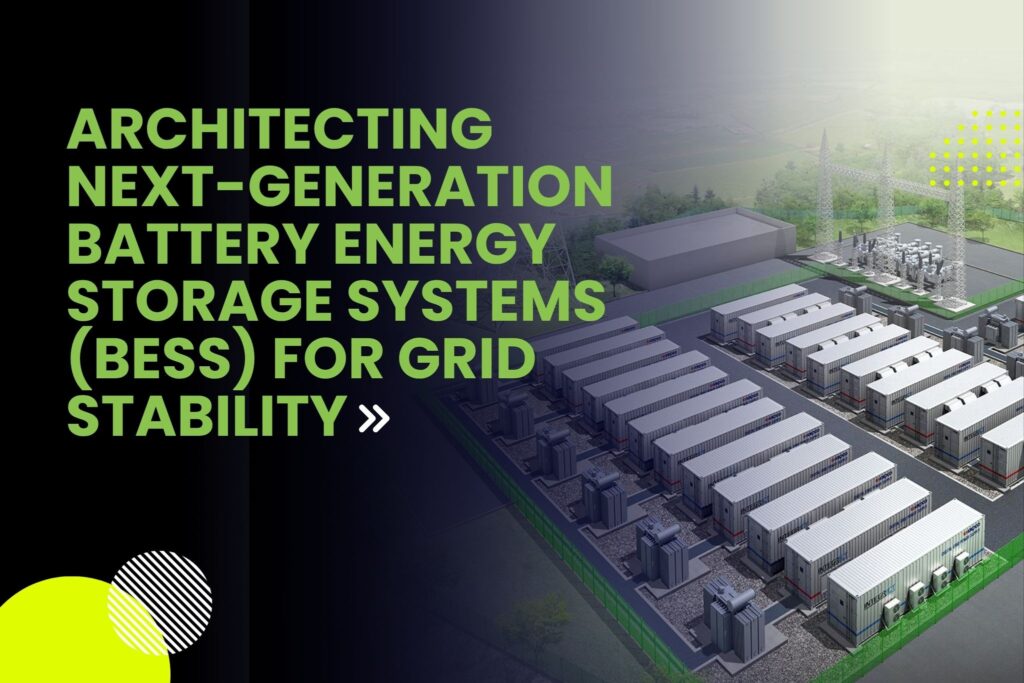
The global shift toward renewable energy sources has introduced critical stability issues to electrical grids worldwide. Solar arrays and wind farms produce power based on weather conditions rather than consumer demand patterns. To bridge this gap, modern electrical infrastructure relies heavily on stationary Battery Energy Storage Systems (BESS). According to the IEA Global Energy Review, deployments of these systems grew over 40% year-over-year, cementing their role in current decarbonization plans. However, managing multi-megawatt battery packs requires complex control systems to guarantee safe, continuous operation.
The Technical Challenge in Large-Scale Storage
A commercial BESS is not just a collection of standard battery cells. It is an intricate assembly containing thousands of distinct lithium-ion components wired in series and parallel. Without deep diagnostic monitoring, individual cells can drift in voltage, reducing total system capacity or causing high heat generation. If left unmanaged, this localized heat can trigger thermal runaway, destroying expensive storage assets and creating major site safety hazards.
+————————————————————-+
| Central BESS Control Station |
+————————————————————-+
^
| [Modbus / RS485 Protocol]
v
+————————————————————-+
| XapSync Industrial Battery Monitoring System |
+————————————————————-+
^
| [High-Speed CAN bus]
v
+————————————————————-+
| Battery Pack 1 | Battery Pack 2 | Battery Pack 3 |
| (Lithium-Ion/LFP) | (Lithium-Ion/LFP) | (Lithium-Ion/LFP) |
+————————————————————-+
Protocol Standardization: CAN bus, Modbus, and RS485
To manage these large layouts, industrial energy architectures use multi-layered communications:
- Cell-Level Tracking: Internal battery networks use high-speed CAN bus lines to track immediate voltage fluctuations and balancing metrics.
- System Integration: The local battery management system (BMS) communicates with the broader facility controller via Modbus protocols run over physical RS485 connections.
Implementing XapSync creates an integrated data pipeline across these layers. It tracks every cell group continually, providing system operators with clear visibility to balance charges, schedule runtime rotations, and protect equipment health.
Moving from Reactive Repairs to Predictive Maintenance
Traditional storage management relied on fixed threshold alarms. If a component overheated past a preset limit, the system simply disconnected the loop. This style of reactive protection prevents immediate disasters but introduces costly facility downtime.
Modern systems use predictive maintenance algorithms instead. By cross-referencing live data streams from XapSync with historical wear models, the platform identifies minor performance changes that signal future failures weeks in advance. This gives engineering teams ample time to swap out weak cells during routine maintenance windows, keeping the broader site online.
As global energy demands rise, building robust, data-connected storage systems is essential for long-term power stability. Utilizing specialized monitoring platforms like XapSync gives operators the diagnostic clarity needed to maximize equipment lifespans and run safe, highly efficient utility stations.